Temperature-controllED fabric painting
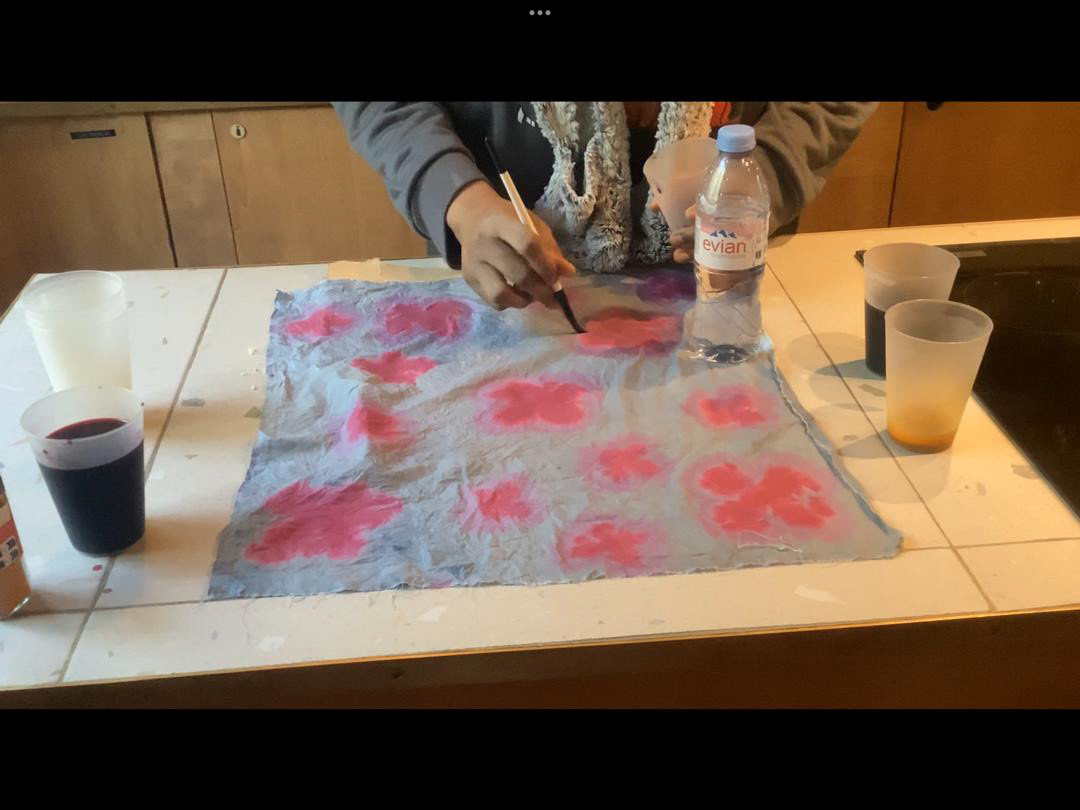
Objective: Create an abstract painting of a blue-bird hibiscus flower from a singular batch of Hibiscus leaves dye
Method: Carefully monitoring temperature and water content (using alum- scoured and vinegar-washed cotton).
Observation: The palette ranged from blues, to reds, to fuchsias and demonstrated high sensitivity to temperature variation
Pivots: Using a turmeric-based dye batch as pollen imagery
Key takeaway: Achieved the blue background tone after several trials, learning to selectively set and remove hues using a rapid hot soak followed by repeated cold shocks. Rapid temperature variation reduced purple and pink hues and prevented the gray-ing and dulling commonly observed in air-cooled hibiscus dyes.
Cold shock technique
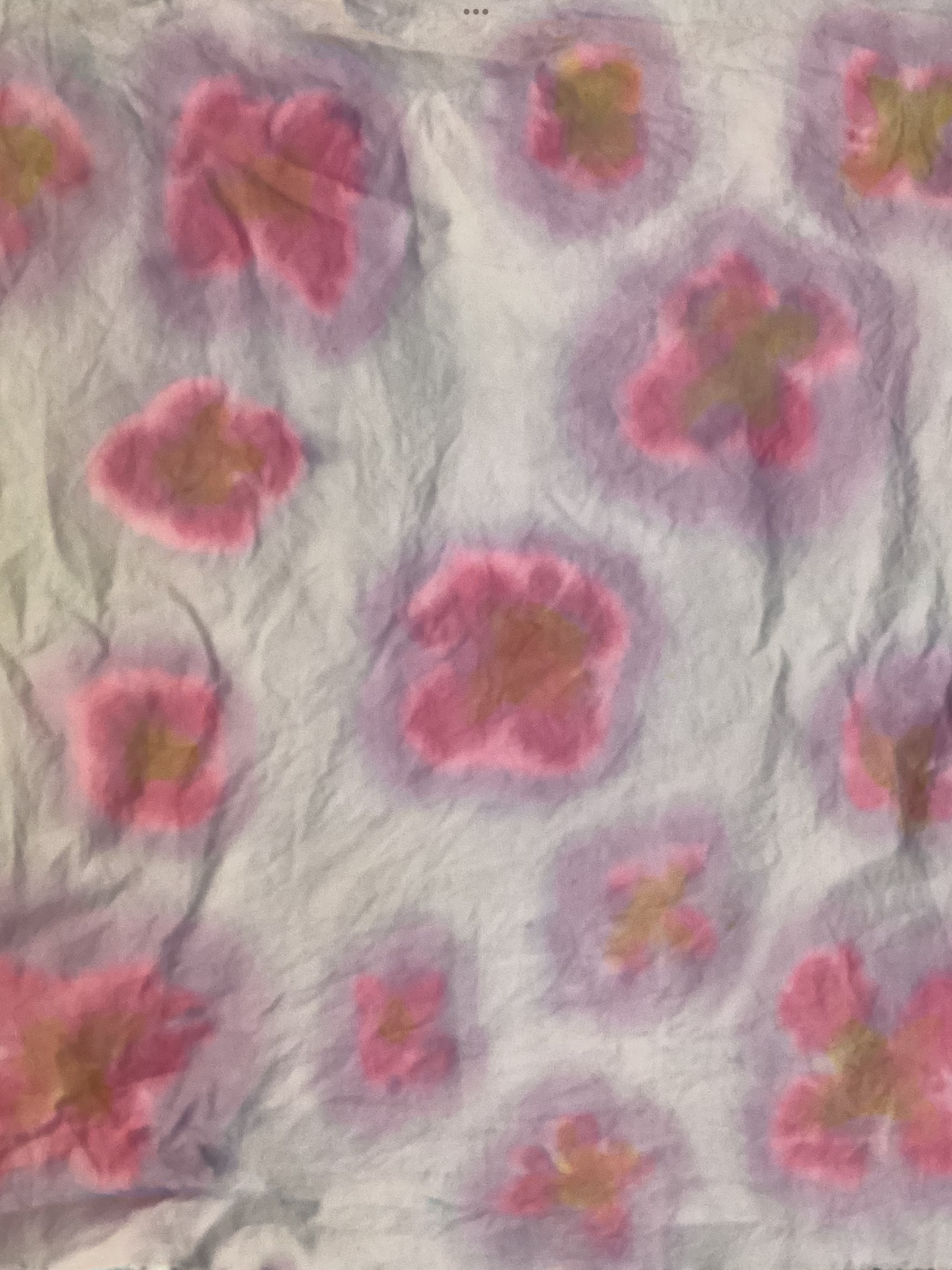
Final results - after sun-drying
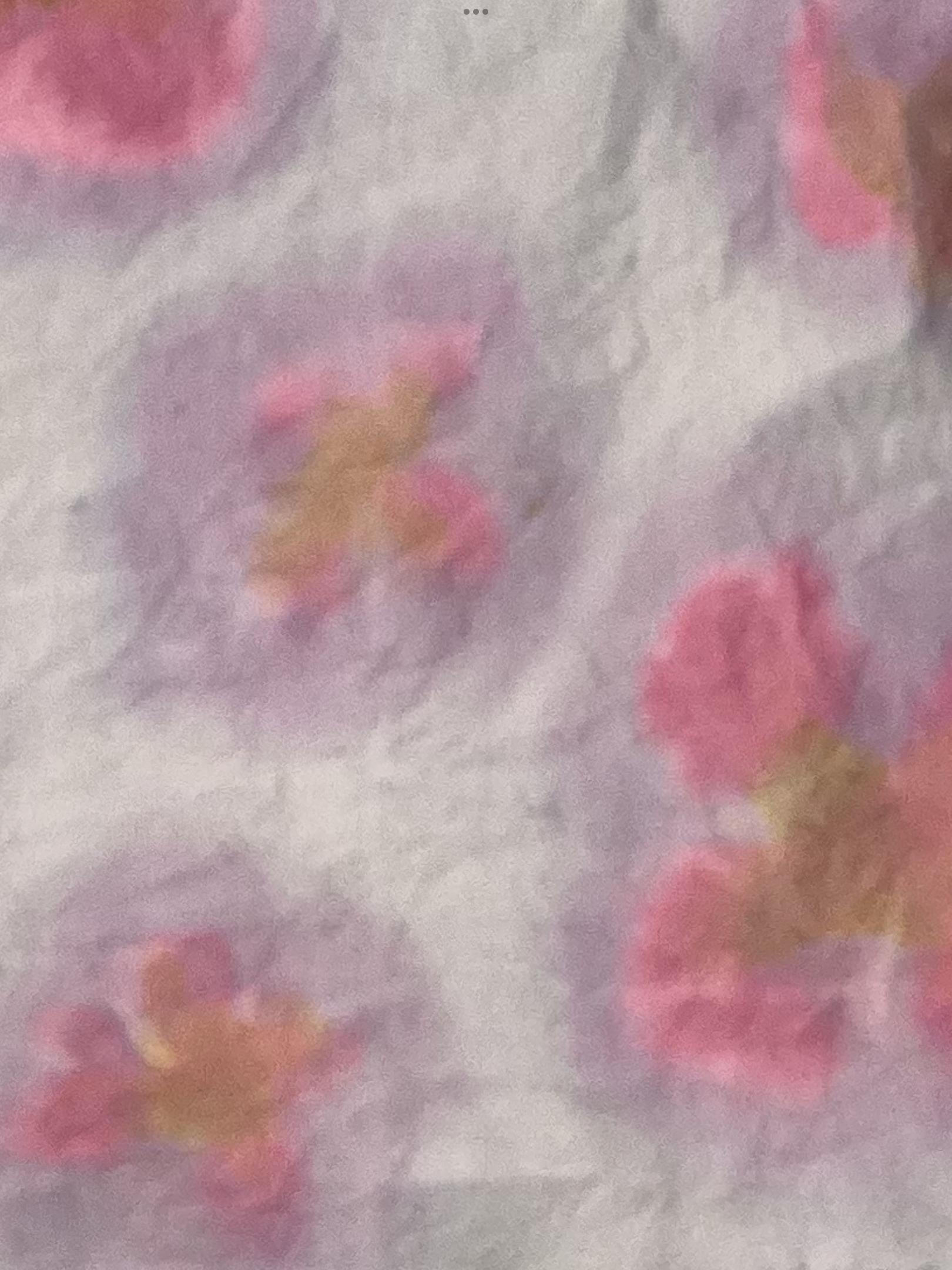
Abstract depiction
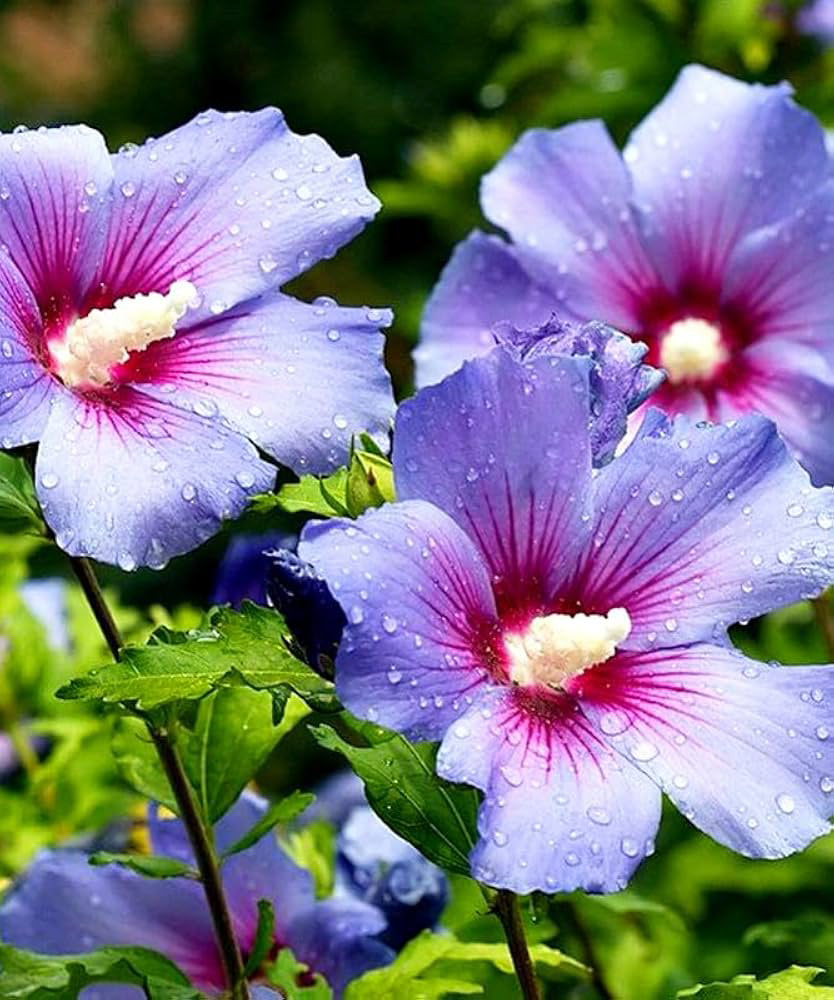
Inspiration - Bluebird hibiscus flower
PALETTE WORK
Objective: Explore the sensitivity of naturally extracted food dyes to temperature control in order to study color intensity and reaction behavior.
Method: Applied hot soak (heated dye solution), cold soak ( cooled solution), and controlled temperature variation (progressive soaking at various temperatures over time).
Observation: Hot soak methods consistently produced deeper hues.
Key takeaway: Results varied significantly by method and dye composition. A follow-up study is needed to examine whether dyes extracted from specific food categories exhibit similar behaviours because of on shared chemical components.
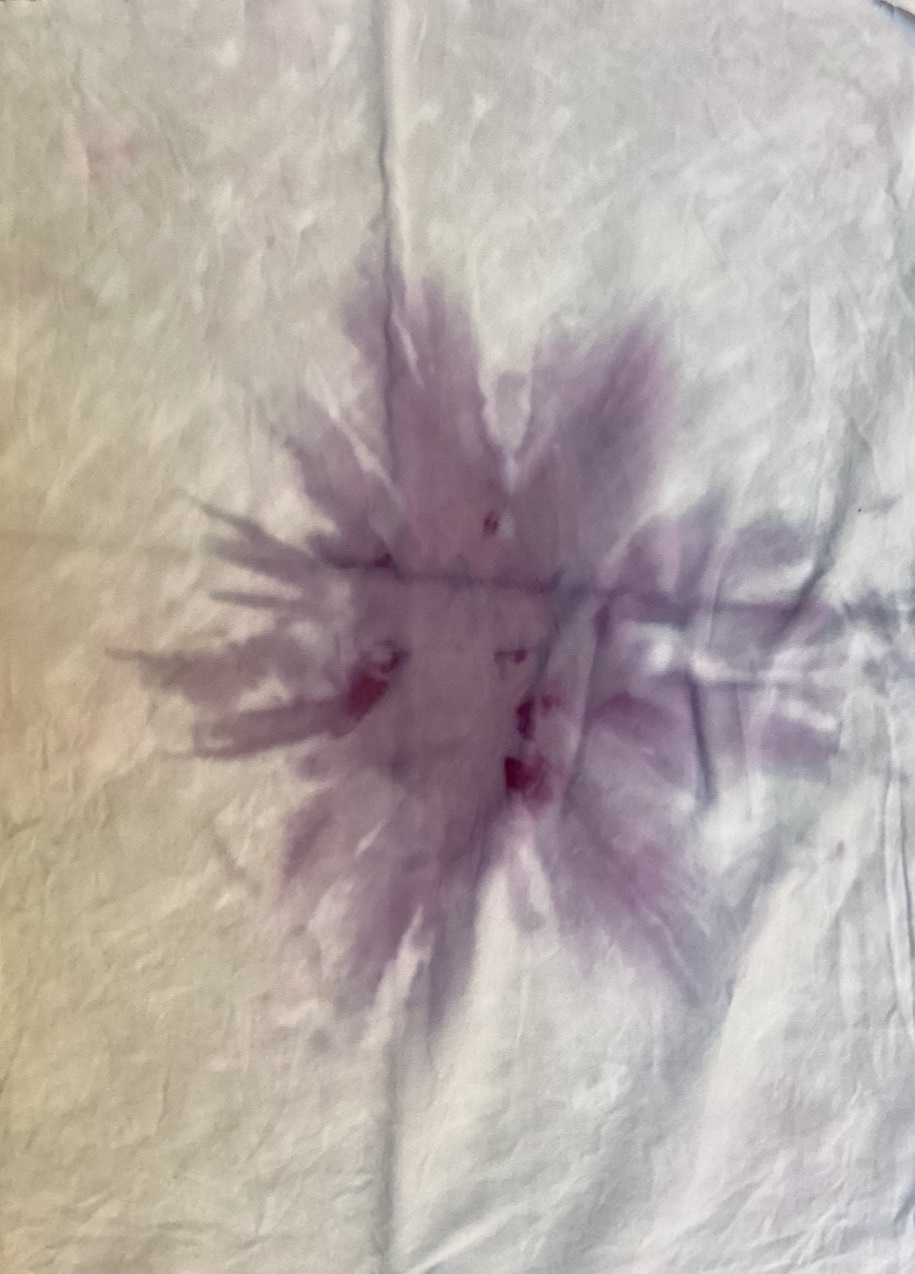
Hibiscus (temperature control)
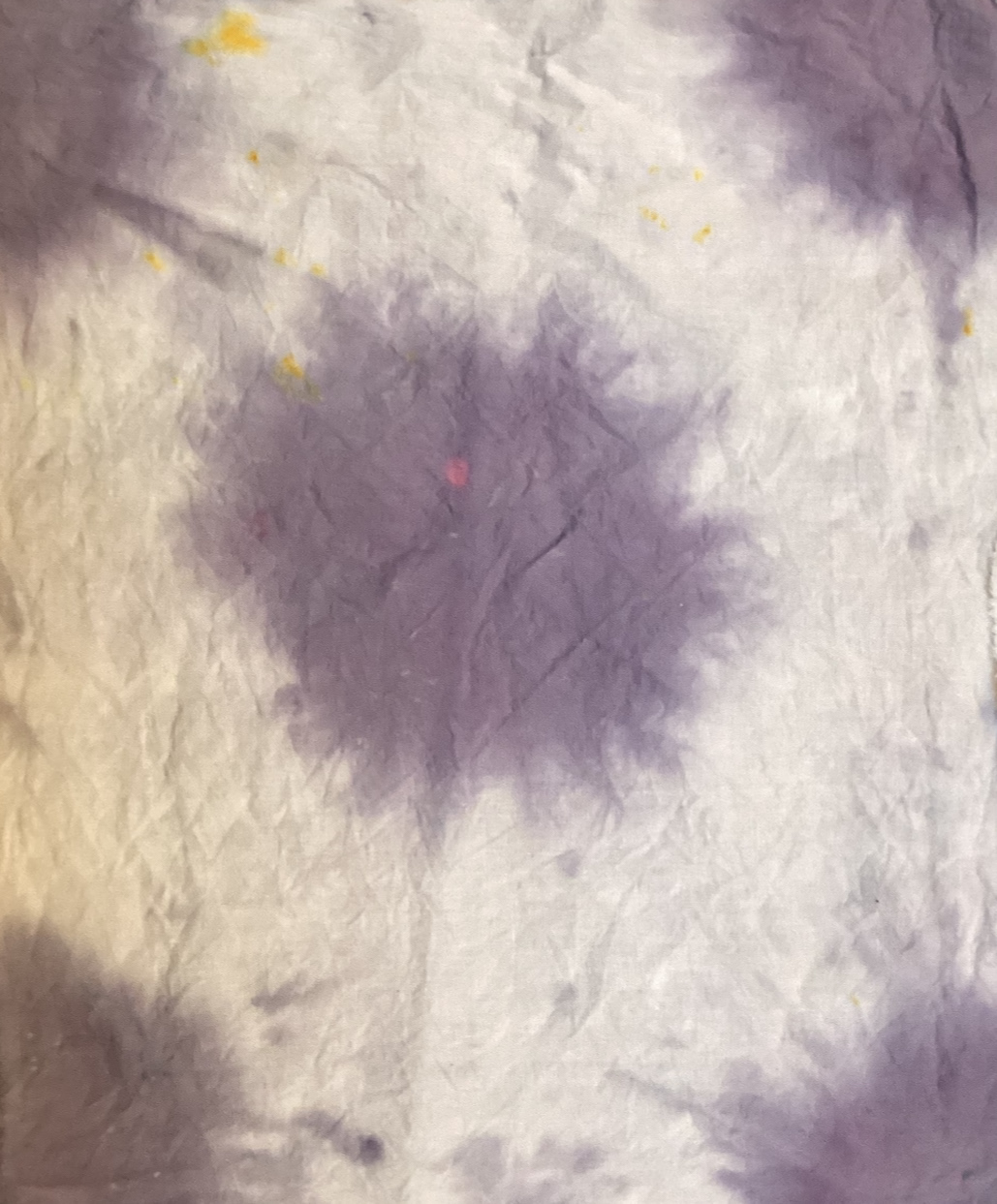
Purple cabbage (temperature contol)
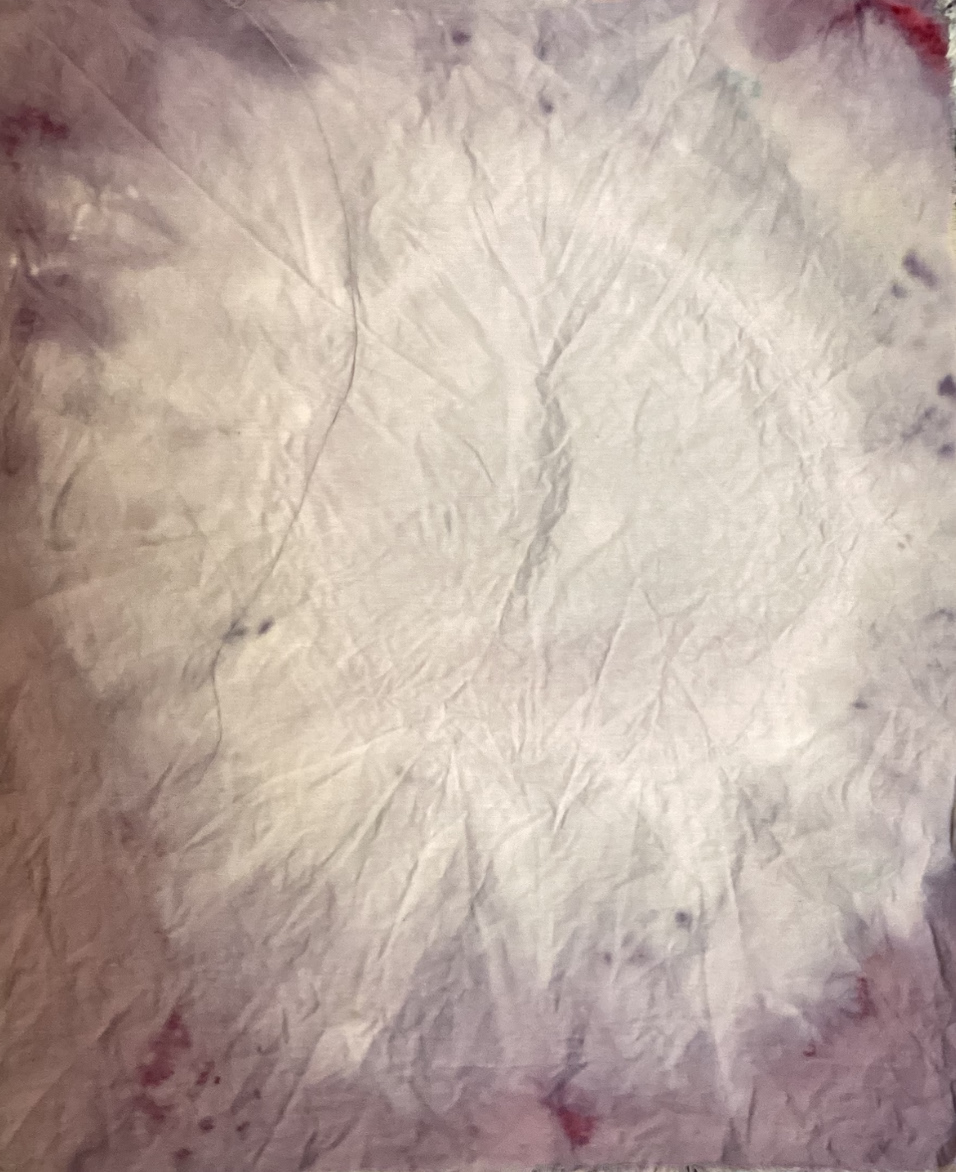
Hibiscus gradient attempt 1 (temperature control)
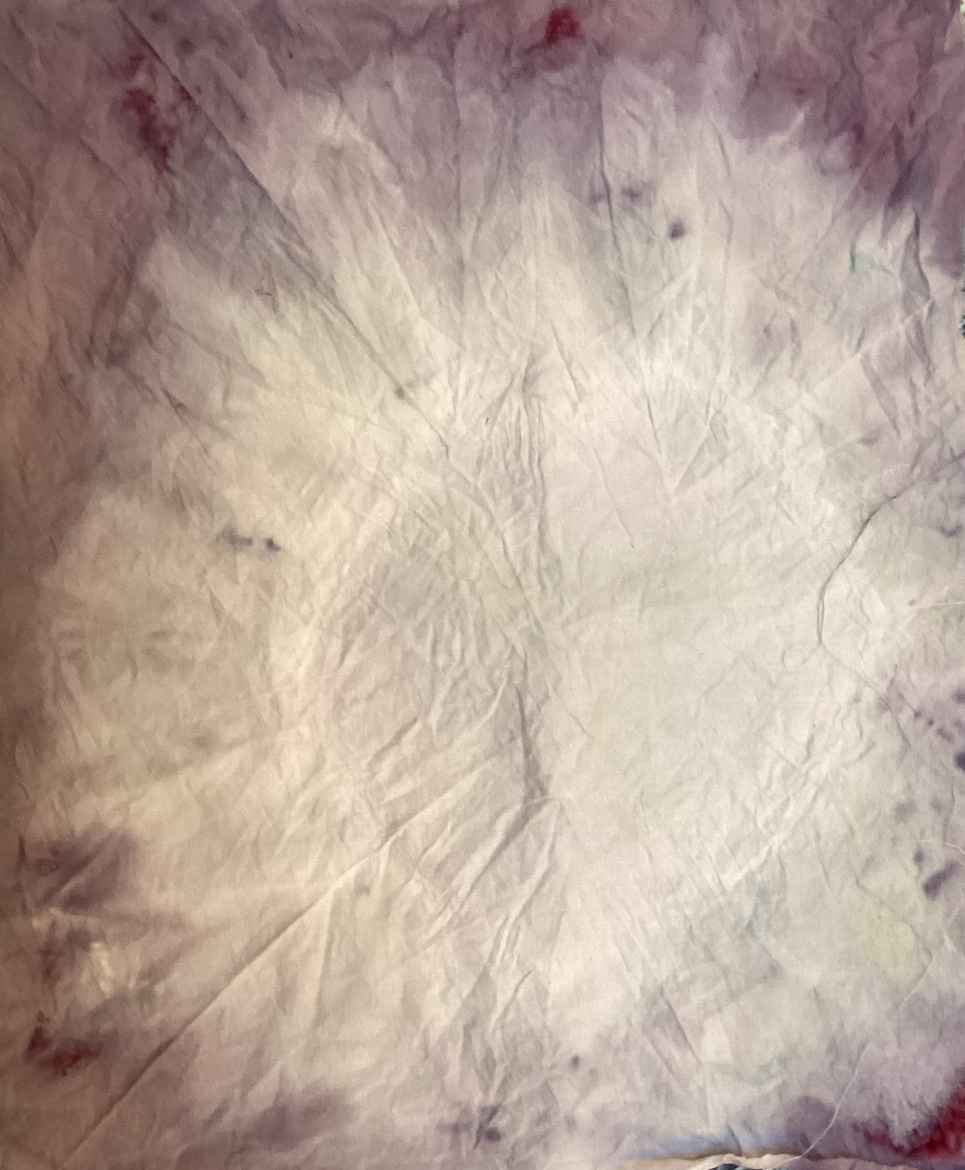
Hibiscus gradient attempt 2 (temperature control)
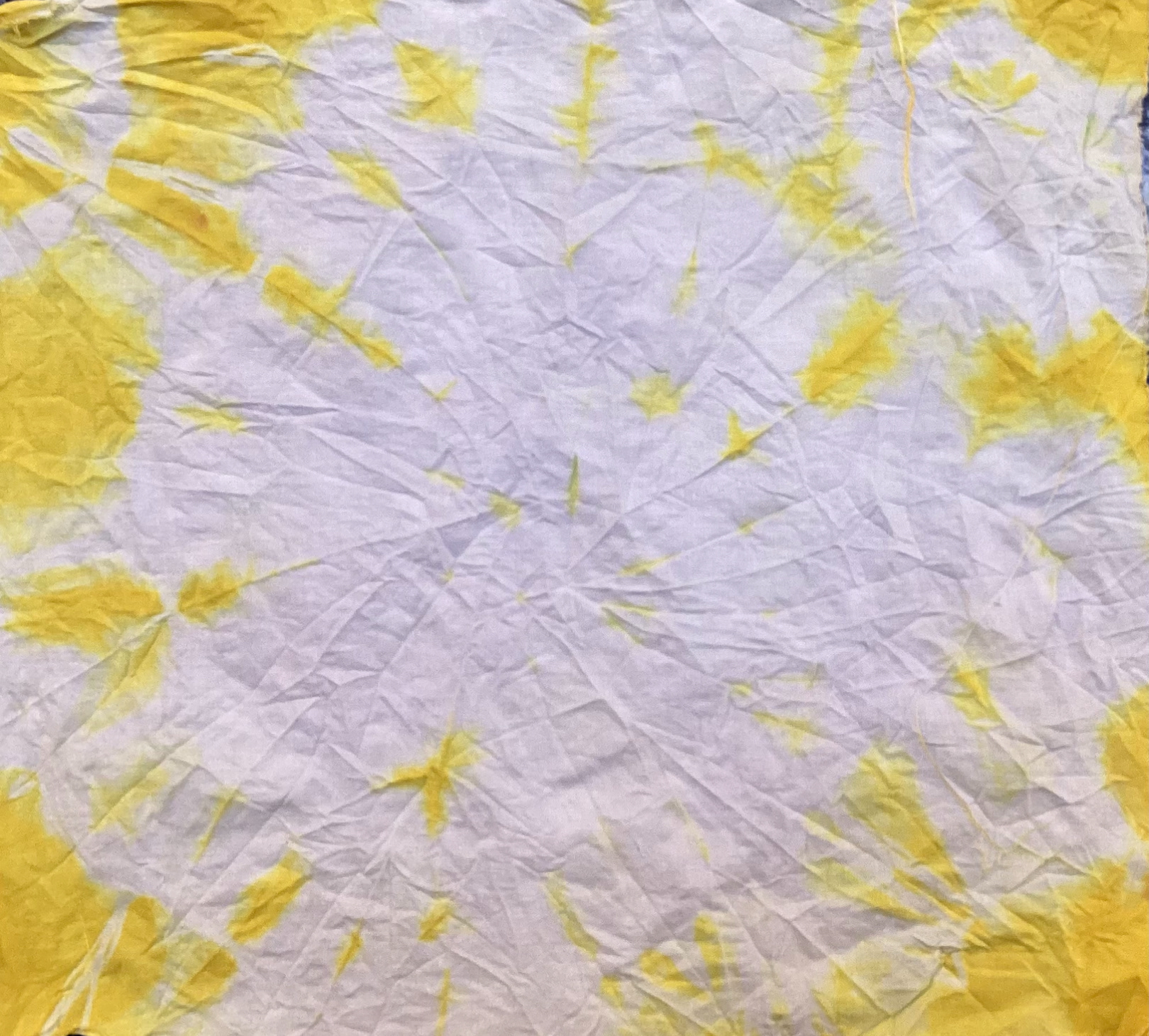
Tumeric (hot soak)
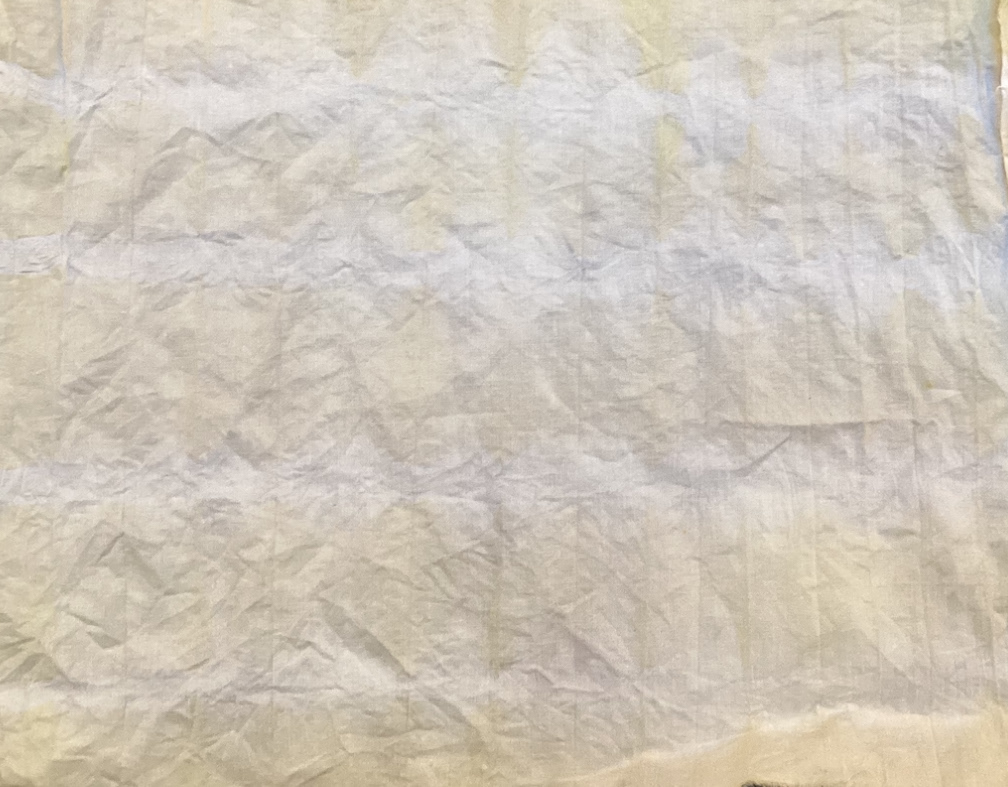
coffee (cold soak)
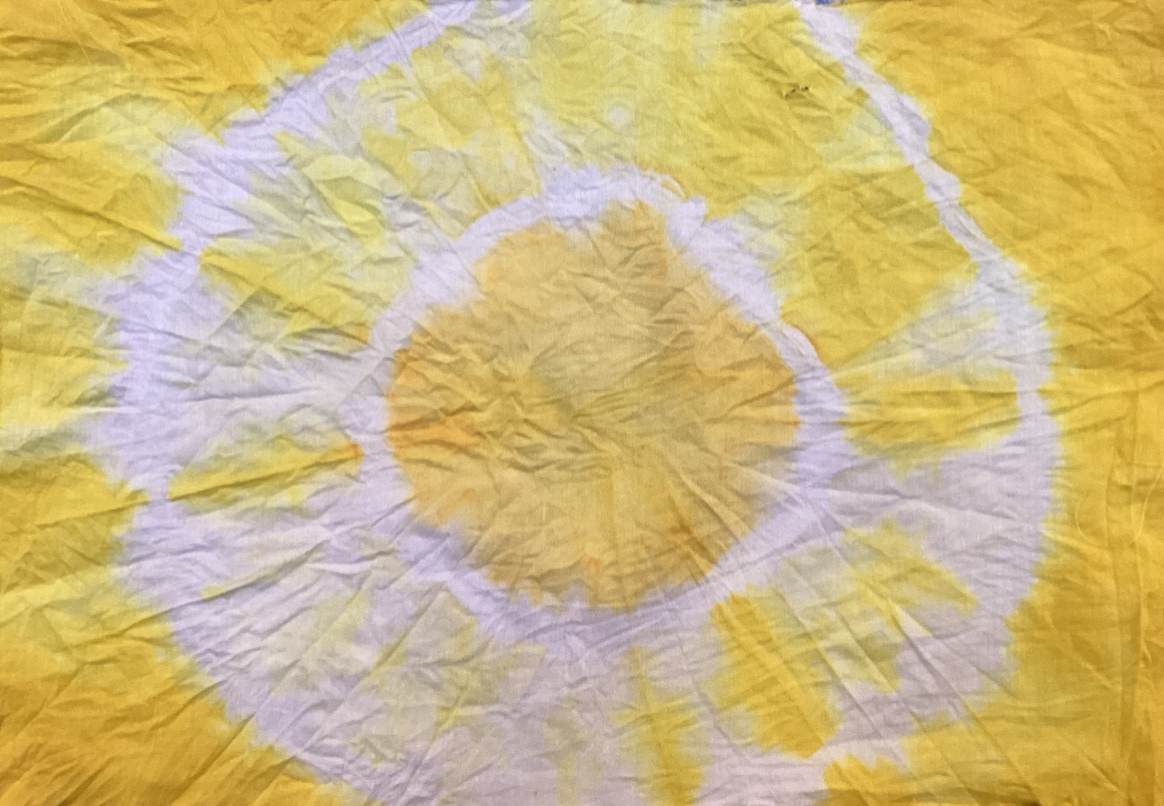
Tumeric & saffron (cold soak, hot soak)
HEAT EXPOSURE EXPERIMENTS
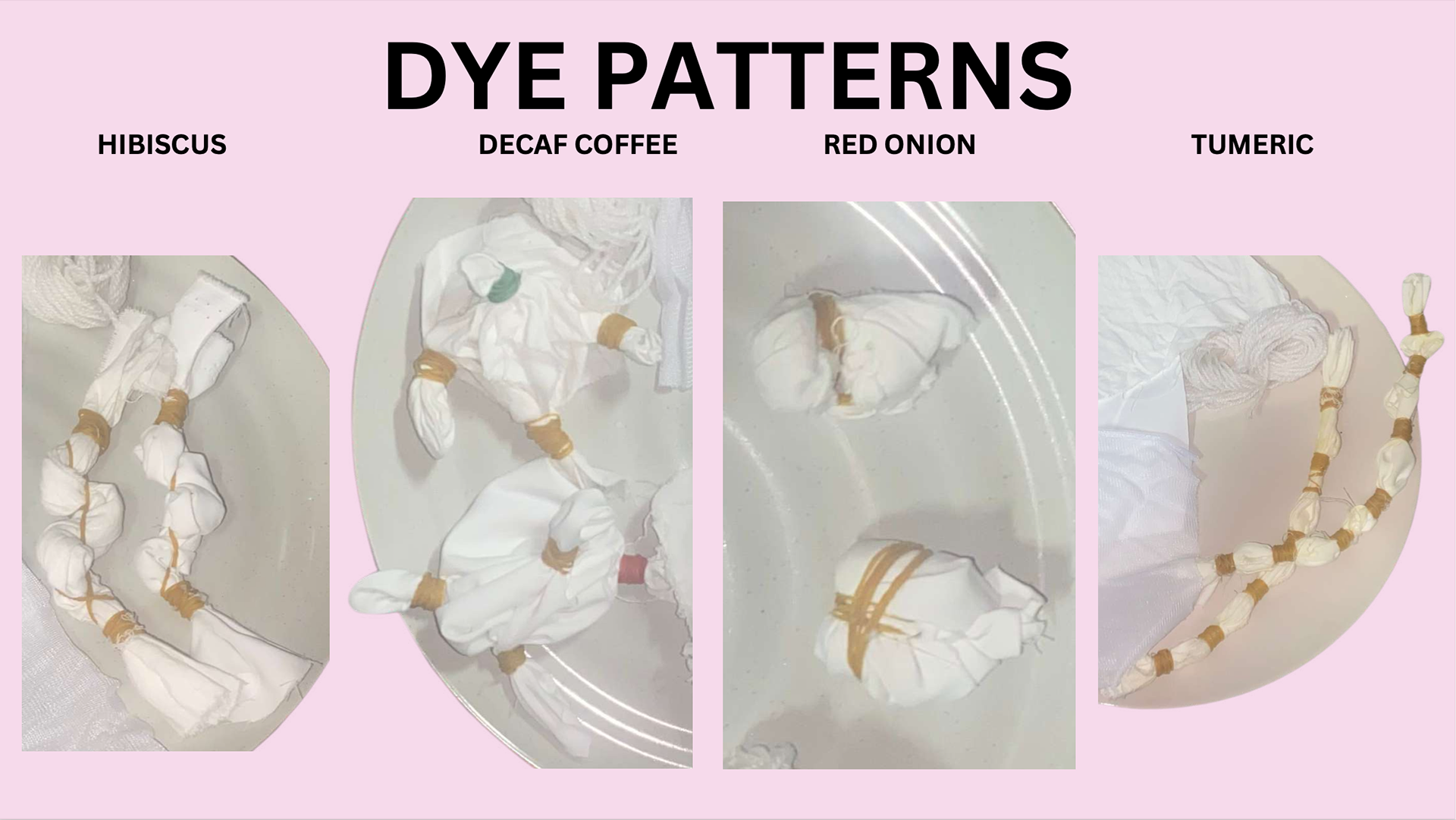
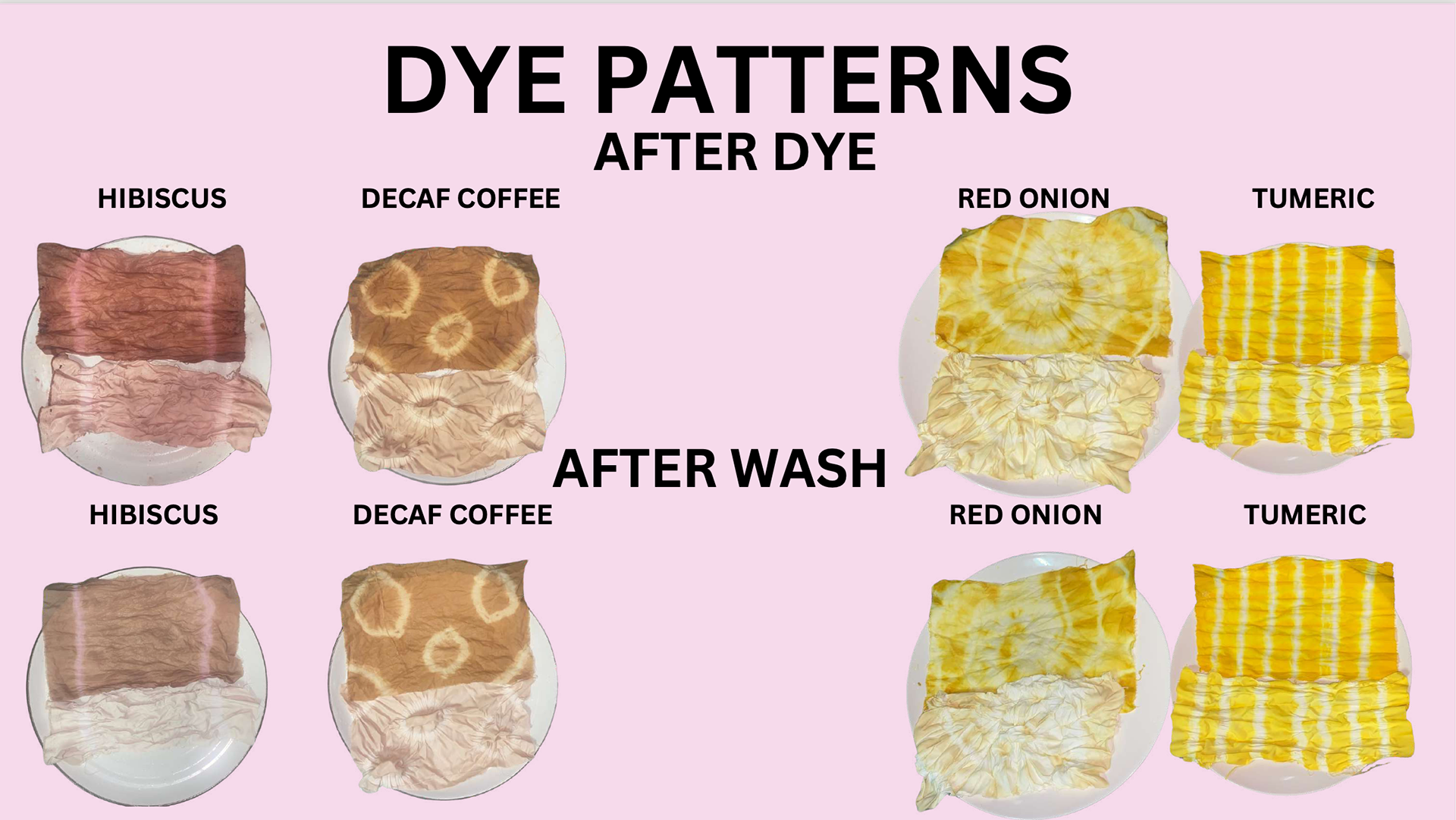
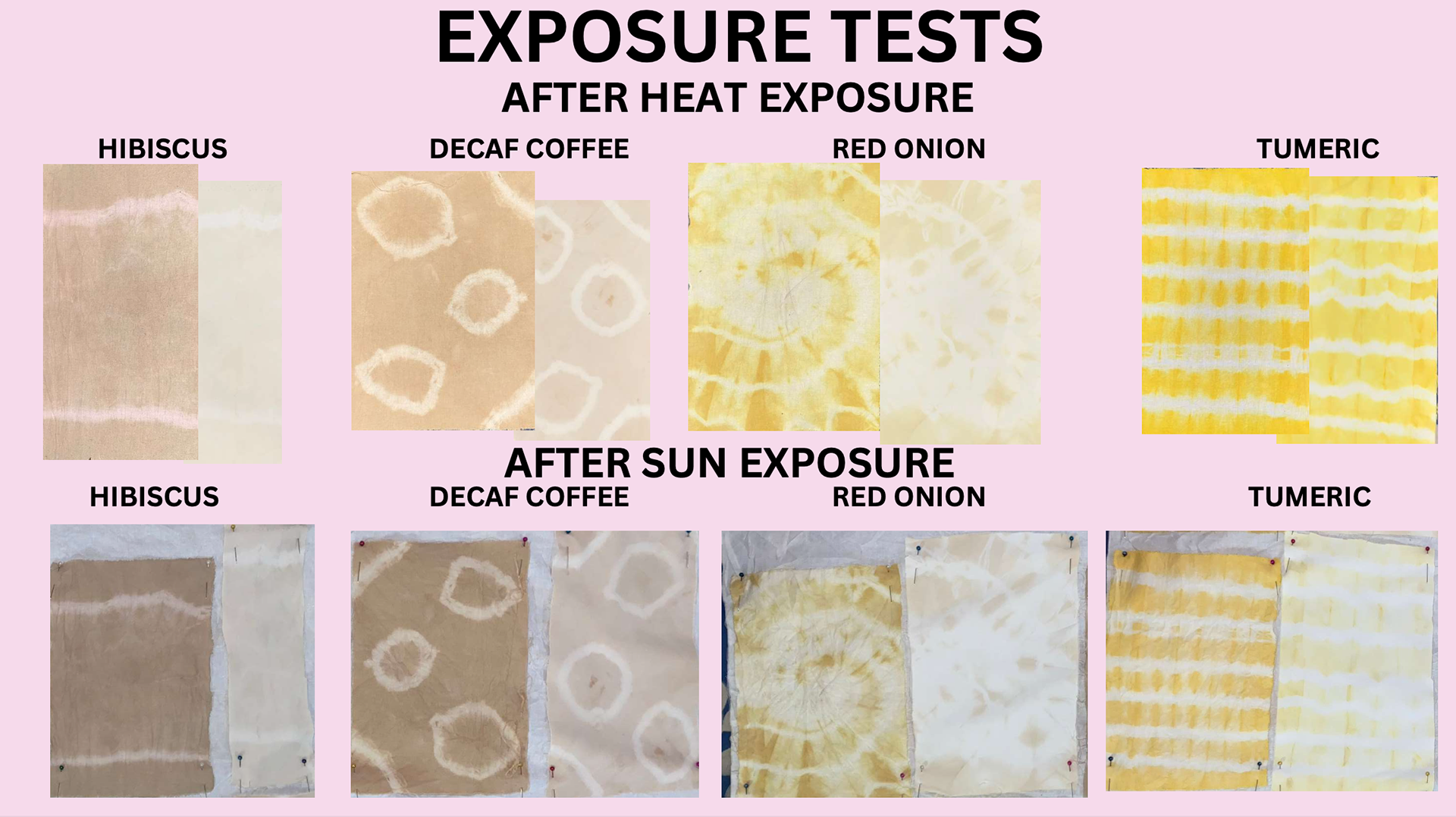
Objective: Answer the hypothesis that naturally dyes fabrics seem to lose vibrancy compared to their appearance when made or bought (to understand the sensitivity of natural dyes to washing, heat and light exposure)
Method:
Tested both natural cotton and a synthetic fabric (pre-scoured and dyed using a 1-hour dye boil followed by a 12-hour cold soak). Heat exposure was simulated using a steam iron and light exposure was simulated by placing fabrics in direct sunlight for 12 hours during peak daylight.
Tested both natural cotton and a synthetic fabric (pre-scoured and dyed using a 1-hour dye boil followed by a 12-hour cold soak). Heat exposure was simulated using a steam iron and light exposure was simulated by placing fabrics in direct sunlight for 12 hours during peak daylight.
Observation:
Heat exposure resulted in a noticeable lightening of color, while light exposure caused a re-darkening and dulling effect.
Heat exposure resulted in a noticeable lightening of color, while light exposure caused a re-darkening and dulling effect.
Key takeaway / Next steps:
These results suggest that heat and light impact natural dyes differently. A follow-up study will focus on how to prevent these reactions and testing low-impact color-setting techniques.
These results suggest that heat and light impact natural dyes differently. A follow-up study will focus on how to prevent these reactions and testing low-impact color-setting techniques.